
Study on urinary and reproductive problems in pigs, conducted by a team of students and researchers from the Faculty of Veterinary Medicine, as part of a project funded by the European College of Porcine Health Management
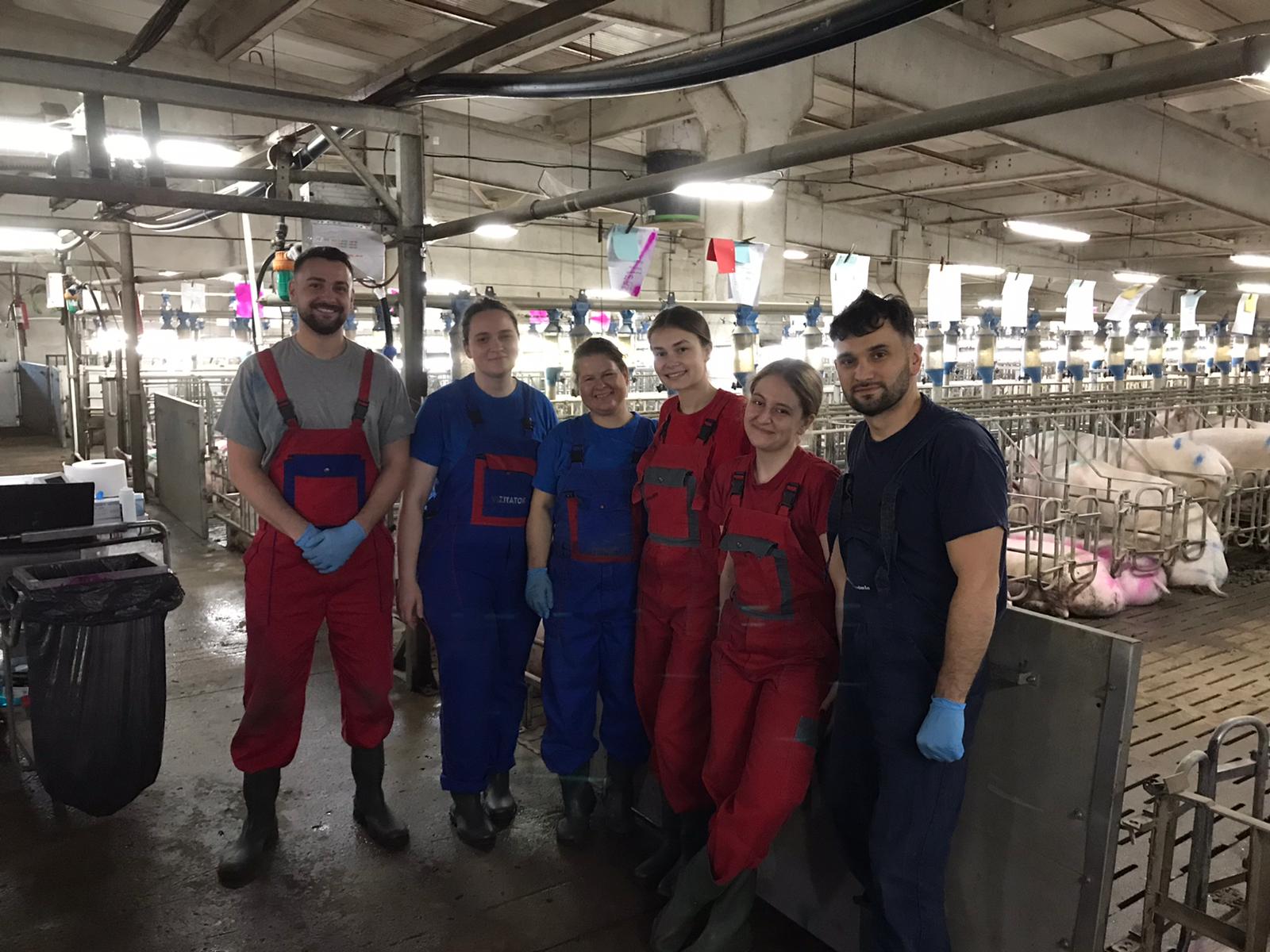
A team of researchers and students from the Faculty of Veterinary Medicine at USAMV Cluj-Napoca has carried out the first phase of a study dedicated to assessing urinary and reproductive problems in sows, as part of a project funded by the European College of Porcine Health Management (ECPHM).
This study aims to improve understanding of urogenital tract pathology in sows and to contribute to the development of more effective methods of diagnosis and health management on pig farms.
The work took place on a commercial pig farm and involved a comprehensive clinical assessment of the sows, using modern diagnostic methods such as urogenital ultrasound, vaginoscopy and rapid urinary biochemistry tests. Several aspects of health status were also assessed, including lameness score, body condition, mammary gland status, body temperature, faecal consistency and the presence of shoulder ulcers.
The study extended to the abattoir, where the urogenital systems of the same sows were examined post-mortem, with anatomical measurements taken and tissue and urine samples collected for further investigation. During the visit, biological samples (urine and cervical swabs) were also collected for further analysis, which will be carried out at our faculty, including pathological anatomy and microbiology investigations.
The activities were carried out by a team coordinated by Lecturer Dr Andrei Ungur, together with Dr Christine Unterweger (Vetmeduni Vienna), a mentor within the residency programme of the European College of Porcine Health Management. The team included Dr Ion Tașcă, a graduate of the Faculty of Veterinary Medicine with experience in swine health management, PhD candidate Anamaria Gabor, as well as students Iulia Barna and Ioana Godri. The laboratory investigations are coordinated by Dr Andrada Neagoe (Pathological Anatomy) and Dr Cristiana Novac (Microbiology).
“The research team extends its thanks to the farm and the abattoir that facilitated this stage of the study, for their openness and cooperation in carrying out the research activities,” stated Lecturer Dr Andrei Ungur.