
Go Green Incubator, Cohort 3 – Students will present their business ideas on 11 June
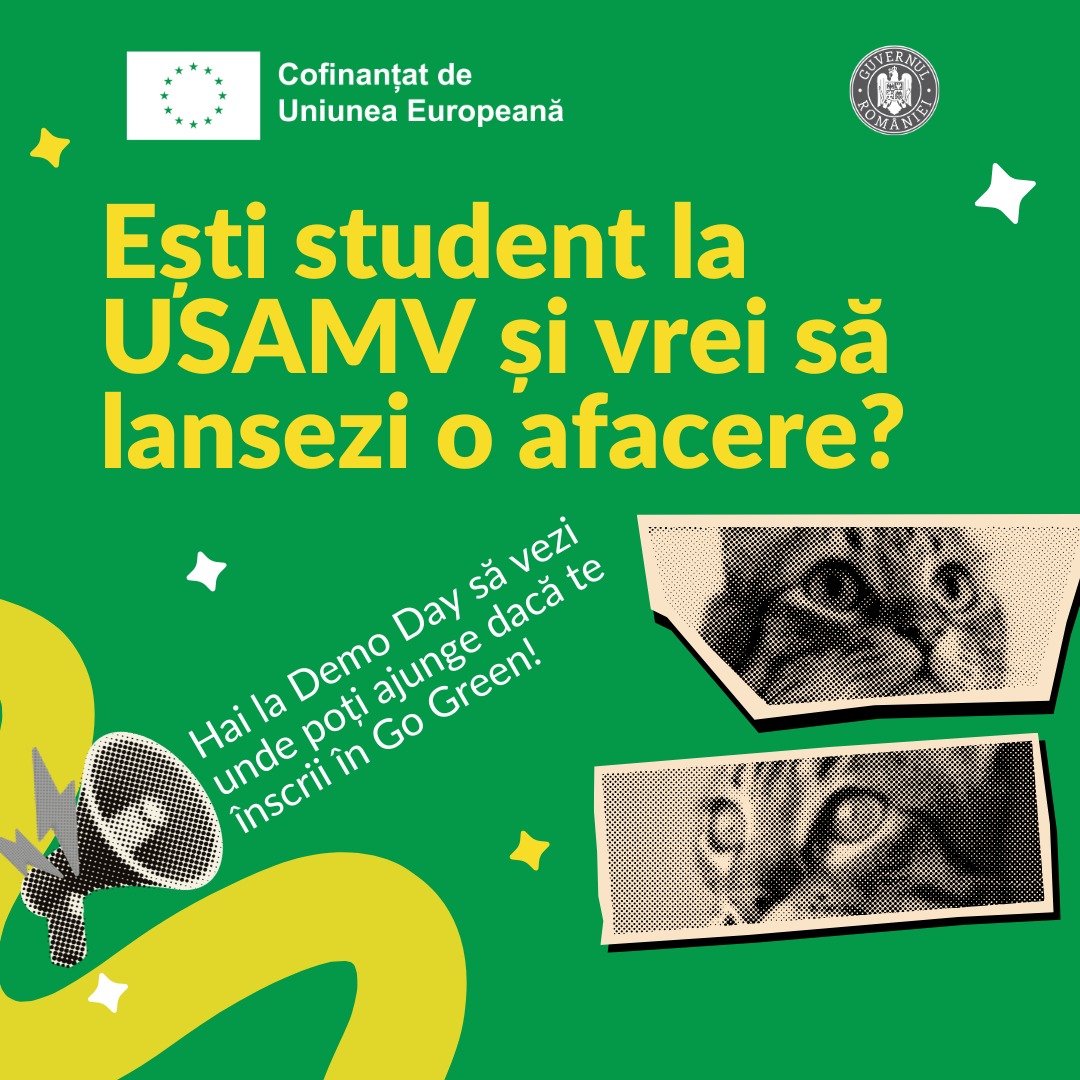
The Biodiversity Research Centre will host, on 11 June 2026 at 2.00 pm, a meeting of the students from Cohort 3 of the Go Green Incubator, during which they will present their business ideas!
“Between March and June 2026, participants developed their practical skills through interactive workshops, mentoring sessions and inspirational meetings with successful entrepreneurs. The programme combines entrepreneurship training with the principles of the circular economy and sustainability,” explained Associate Professor Dr Valentin Mihai, from the Faculty of Horticulture and Rural Development Business.
What is Go Green – Entrepreneurship?
Go Green is a free 12-week incubation programme designed for students who want to explore the world of entrepreneurship. A total of 70 students will take part in the programme to develop a business idea into a concrete implementation plan. Over 50 students have already completed the programme.
Here’s what the programme offers:
Practical entrepreneurship workshops on topics such as: idea validation, business models, financial planning, fundraising, pitching and other essential topics for a future entrepreneur;
Personalised mentoring sessions with some of the most highly regarded business experts in our region;
‘Ask Me Anything’ sessions with successful entrepreneurs you’ll get to meet, plus a visit to a local business.
The best business ideas from the programme will be presented at Demo Day, a major event which will also be attended by potential investors.
The latest cohort, the fourth, will run from October to December. Students wishing to take advantage of this opportunity can register via the form: https://forms.gle/WuAjDHkwLKmJPxiT6.
The Go Green entrepreneurship programme is part of the ‘Go Green – Work Placements for Employment’ project – ID 316271, a project co-funded by the European Union through the European Social Fund+ under the Education and Employment Programme 2021–2027. The project is implemented by the World Vision Romania Foundation, in partnership with the Civitas Foundation for Civil Society Cluj and the University of Agricultural Sciences and Veterinary Medicine Cluj-Napoca.